SMART INVENTIONS
NEWS ON INVENTIONS & TECHNOLOGY
• • •
World’s First Ultra-fast Photonic Computing Processor
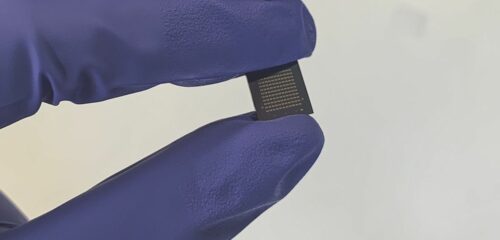
- Researchers at the University of Oxford have devised a way for maximizing information storage density and processing performance using nanowires by polarizing light.
- Each polarization can function as its own information channel, allowing for the storage of more data in numerous channels and a significant increase in information density.
- The researchers used a hybrid glassy material to create a HAD (hybridized-active-dielectric) nanowire that demonstrates switchable material features when illuminated with optical pulses.
First author and DPhil student June Sang Lee, Department of Materials, University of Oxford said, “We all know that the advantage of photonics over electronics is that light is faster and more functional over large bandwidths. So, our aim was to fully harness such advantages of photonics combining with tunable material to realise faster and denser information processing.”
Generating Electricity From Heat Using This Ink
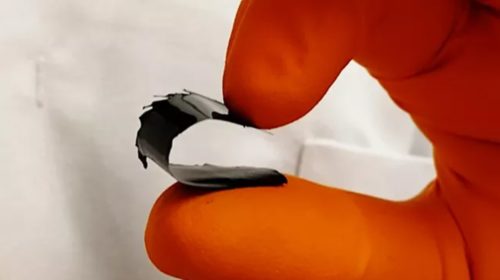
- Researchers in Sweden have developed an ink coating that can transform low-grade heat emitted by electronics into electrical power.
- Researchers from Stockholm’s KTH Royal Institute of Technology have created a potential thermoelectric coating for devices that generate heat of less than 100 degrees Celsius – Their findings were published in the American Chemical Society’s journal Applied Materials and Interfaces.
According to Muhammet Toprak, a professor of materials chemistry at KTH, his team’s research concentrated on the design and development of hybrid thermoelectric materials for room-temperature operations, which combine solid state semiconductors with flexible materials like polymers to create inks. Toprak claims that the coating may be used to generate electricity on any surface that distributes heat. In addition, the research advances our understanding of the capabilities and limitations of materials employed in hybrid thermoelectric material design.
A Smart Scarecrow Drone!
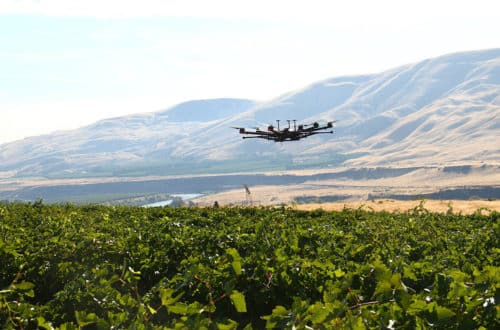
- In the future, cameras could detect blackbirds munching on grapes in a vineyard and send out drones to chase them away, then return to keep an eye out for the next flock of intruders! A research team from Washington State University has created just such a system.
- The system is intended to have automated drones patrolling 24 hours a day to dissuade problem birds such as European starlings and crows, which cost growers millions of dollars in stolen or destroyed fruit each year.
“Growers don’t really have a good tool they can rely on for deterring pest birds at an affordable price,” said Manoj Karkee, Associate Professor in WSU’s Department of Biological Systems Engineering and the study’s corresponding author. “With further refinement and industry partnerships, this system could work.”
The researchers conducted two independent tests for the study: identifying birds and automatically deploying drones. The system is similar to drone package delivery systems in terms of technology. Because there are still several hurdles to overcome, including ensuring that the technology works at scale, complies with federal drone regulations, and continues to deter birds even when drones are commonly flying around, it will be several years before this technology is commercially available for growers.
“The true sign of intelligence is not knowledge but imagination.” Albert Einstein.
“An inventor fails 999 times, and if he succeeds once, he’s in. He treats his failures as simply practice shots.” Charles F. Kettering.
“When one door closes, another door opens; but we so often look so long and regretfully upon the closed door, that we do not see the ones which open for us.” Alexander Graham Bell.
Thank You, An invention is a unique or novel device, method, composition or process. So, we will update information about new Inventions.
Thank You Again!!!!!
R Aditya Vardhan Reddy
 Amazing Inventions